Tracto
One place for the things you track.
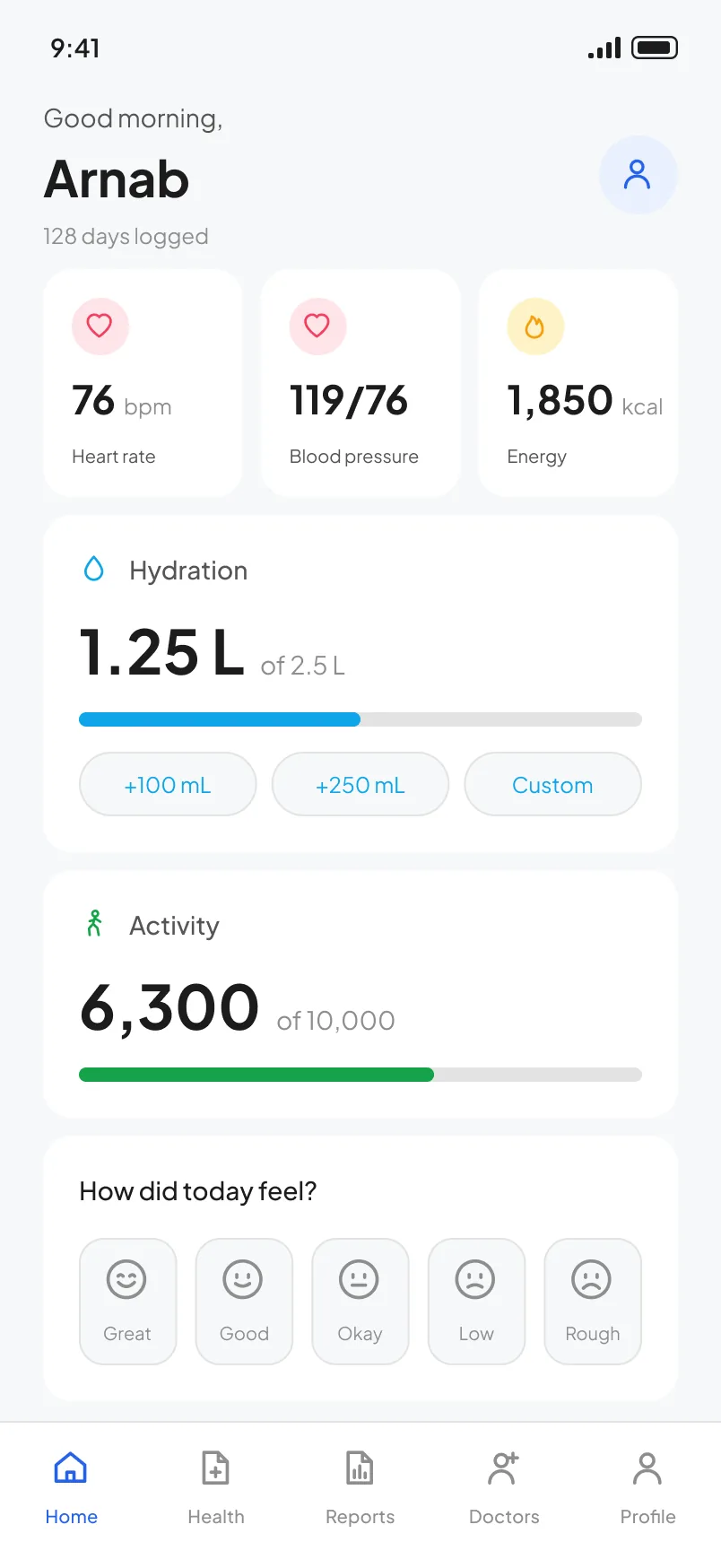
Water, food, vitals and exercise in one app, with reports you can share with a doctor. A self-initiated project, from a short survey to 54 screens.
The problem
People jump between apps to count steps, log meals, check vitals and find a doctor. Tracking becomes a chore, and people give up.
What I did
A survey and five conversations, four written constraints, a design system and 54 screens, with 22 of them spent on logging and reports.
The call
No streaks. A missed week is when you most want the readings, so Tracto counts the days you did log, and that number only goes up.
01The problem
Tracking becomes a chore, and people give up
People jump between apps to count steps, log meals, check vitals and find a doctor. Each one asks for the same information again.
"There are too many apps doing the same thing."
Riya, 27, product manager
02Research
Six findings, two of which changed what I built
A short online survey, then five conversations. The survey was small, so I treat it as directional and haven't put percentages on it.
The phone is the tracker
Watches came second. Whatever I designed had to work on a phone alone, without a wearable.
Water, food, vitals and exercise together
No single metric stood out. People wanted all four, which supported building one app.
Doctors are occasional
Most said only when needed. Booking happens rarely, so it shouldn't be at the centre of the app.
Ease of use beat every feature
It ranked above wearable sync and personalisation, so I kept the feature list short.
Symptom-first made sense to people
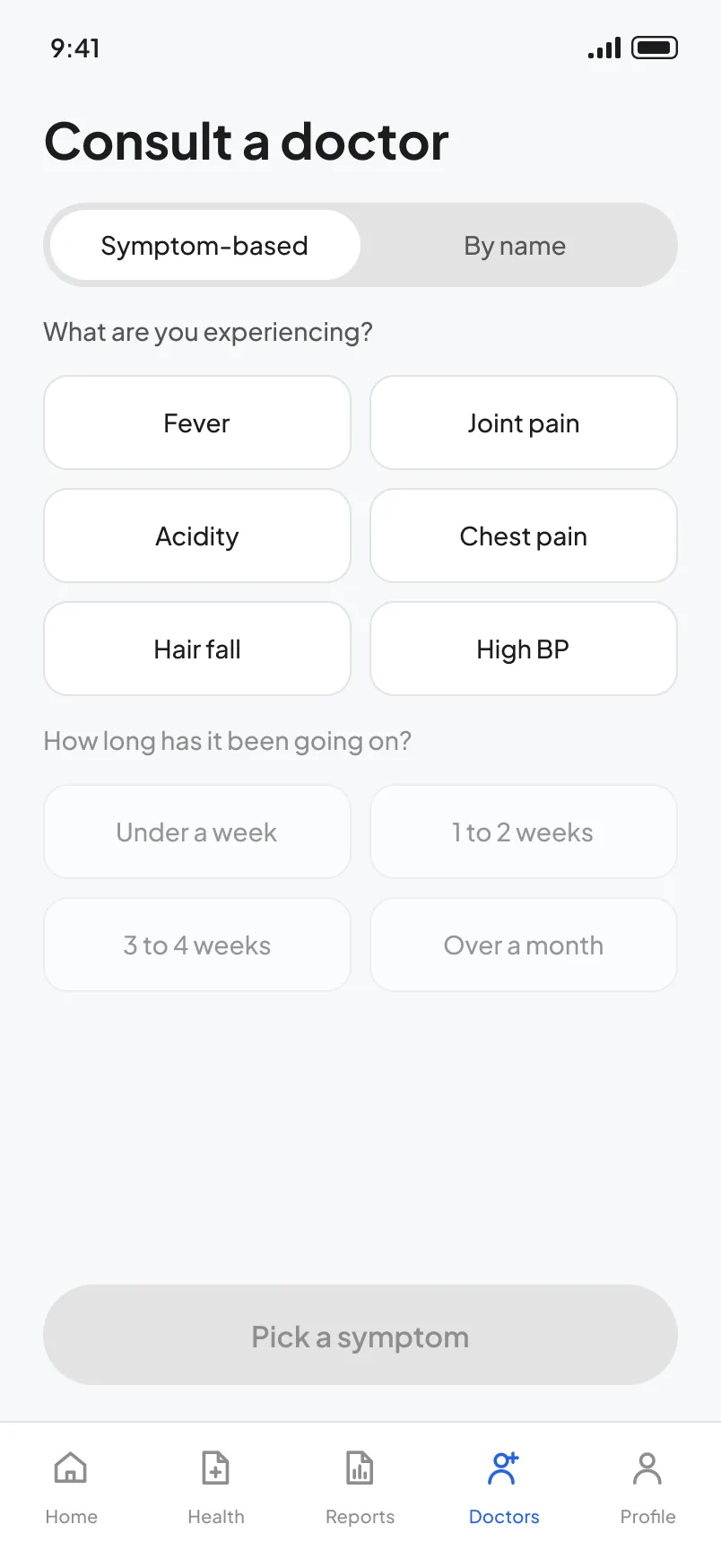
Choosing a specialist by name assumes you already know what is wrong.
Appetite for one app was high
Encouraging, though it's an easy thing to say yes to in a survey.
Insurance advisor, medium confidence with apps
Wants to log blood pressure and sugar regularly and be reminded. Forgets to log readings by hand; most apps feel complex.
Product manager, high confidence with apps
Tracks steps, water and calories daily and wants a routine she can keep. Has no time to log manually and wants charts that mean something.
03Where the product lives
Some modules get used far more than others
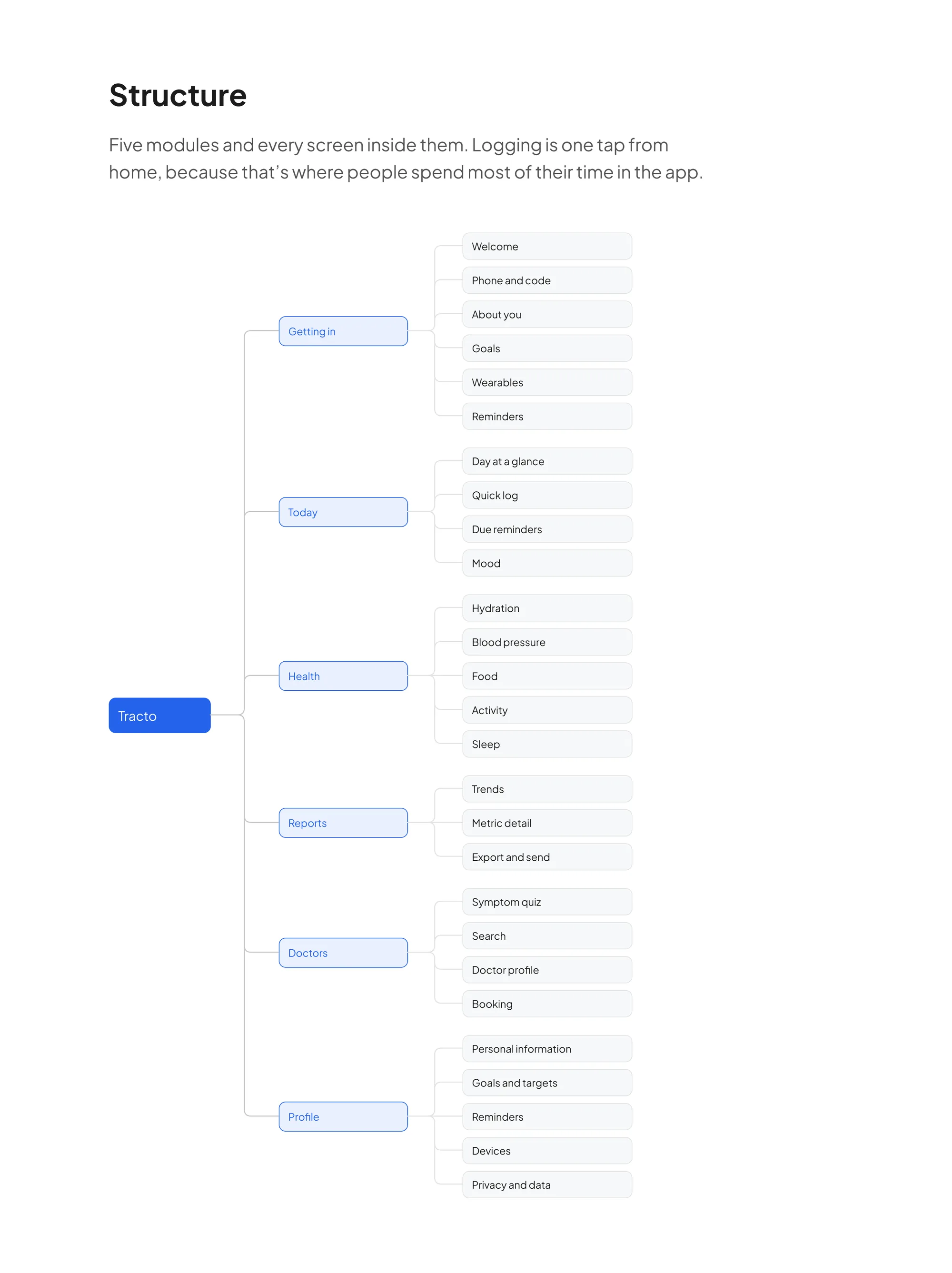
Five modules, and they are not equal. Onboarding runs once. Booking a doctor happens a few times a year. Logging happens several times a day, every day, so it has to stay quick even once it becomes routine.
- LoggingSeveral times a day. Water, food, vitals and exercise.
- ReportsMonthly, or before an appointment. Trends, ranges, export.
- DoctorsA few times a year. Symptom quiz, search, booking.
- ProfileRarely, after setup. Targets, reminders, privacy.
- OnboardingOnce. Welcome, goals, wearable sync.
Bar lengths are illustrative. They show the order of how often each module is used.
22 of the 54 screens are for logging and reports, to match how often they're used.
04What it won't do
Four constraints, written before drawing anything
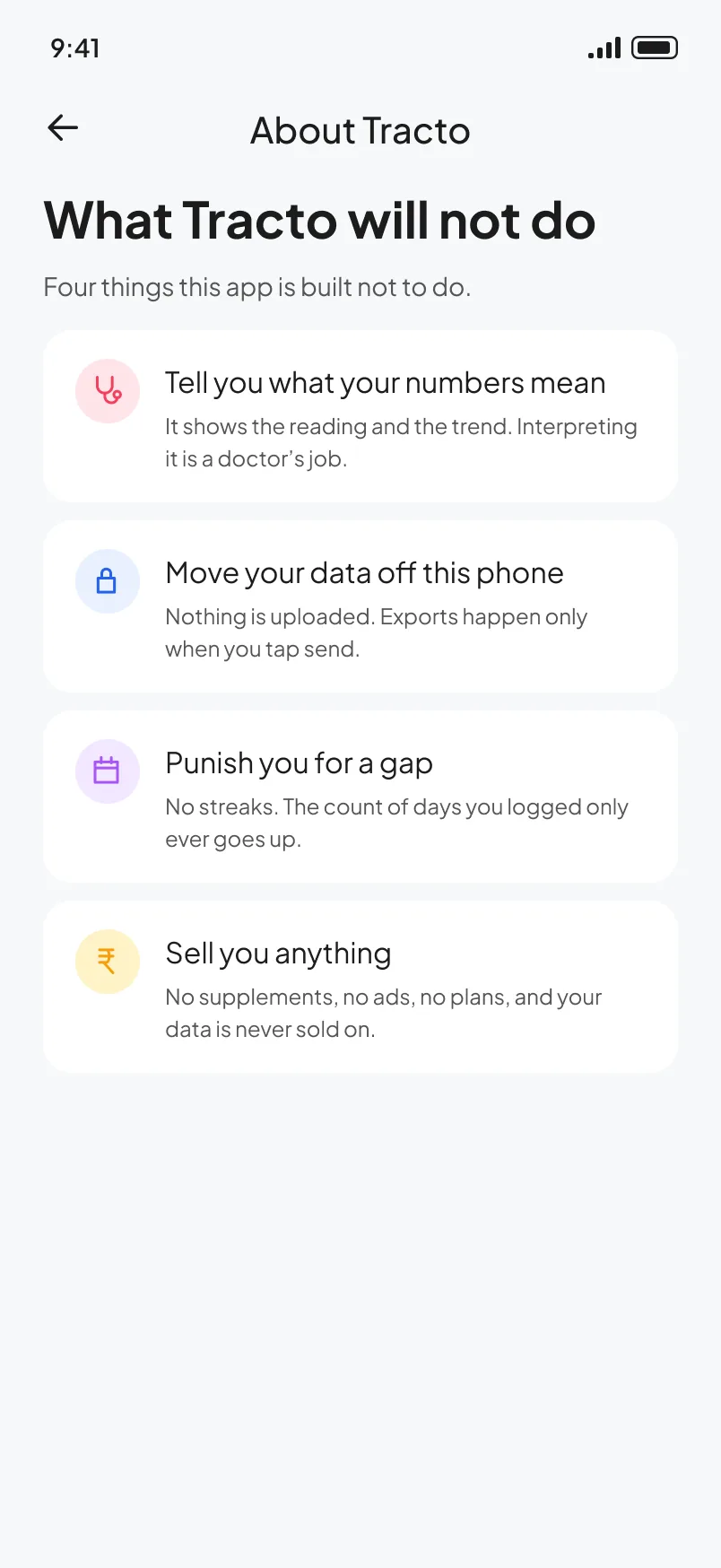
I wrote these first, so I could check later decisions against them. They ship in the app, on the About screen.
Won't tell you what your numbers mean
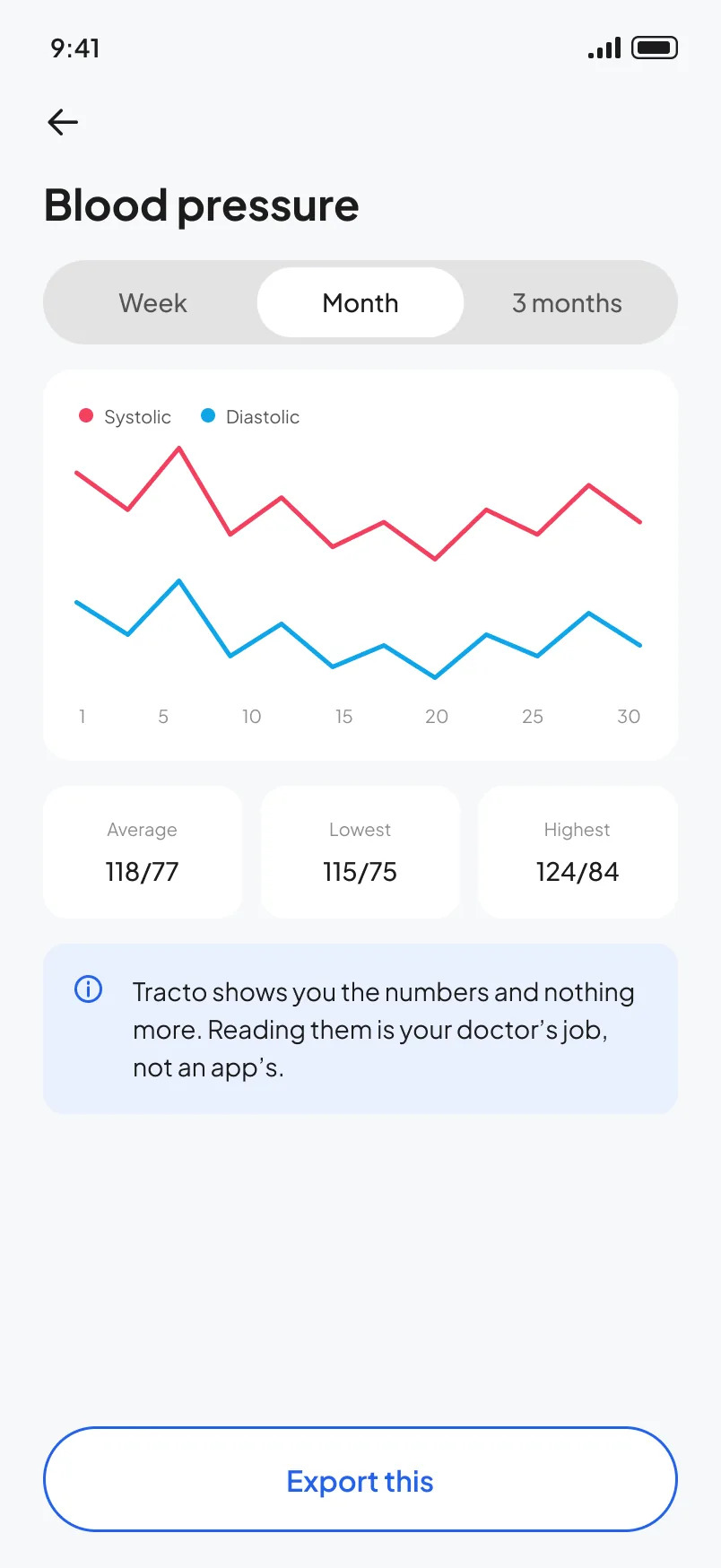
The app shows the reading and the trend, without risk scores or colour-coded judgements. Out-of-range readings say so plainly and suggest seeing a doctor.
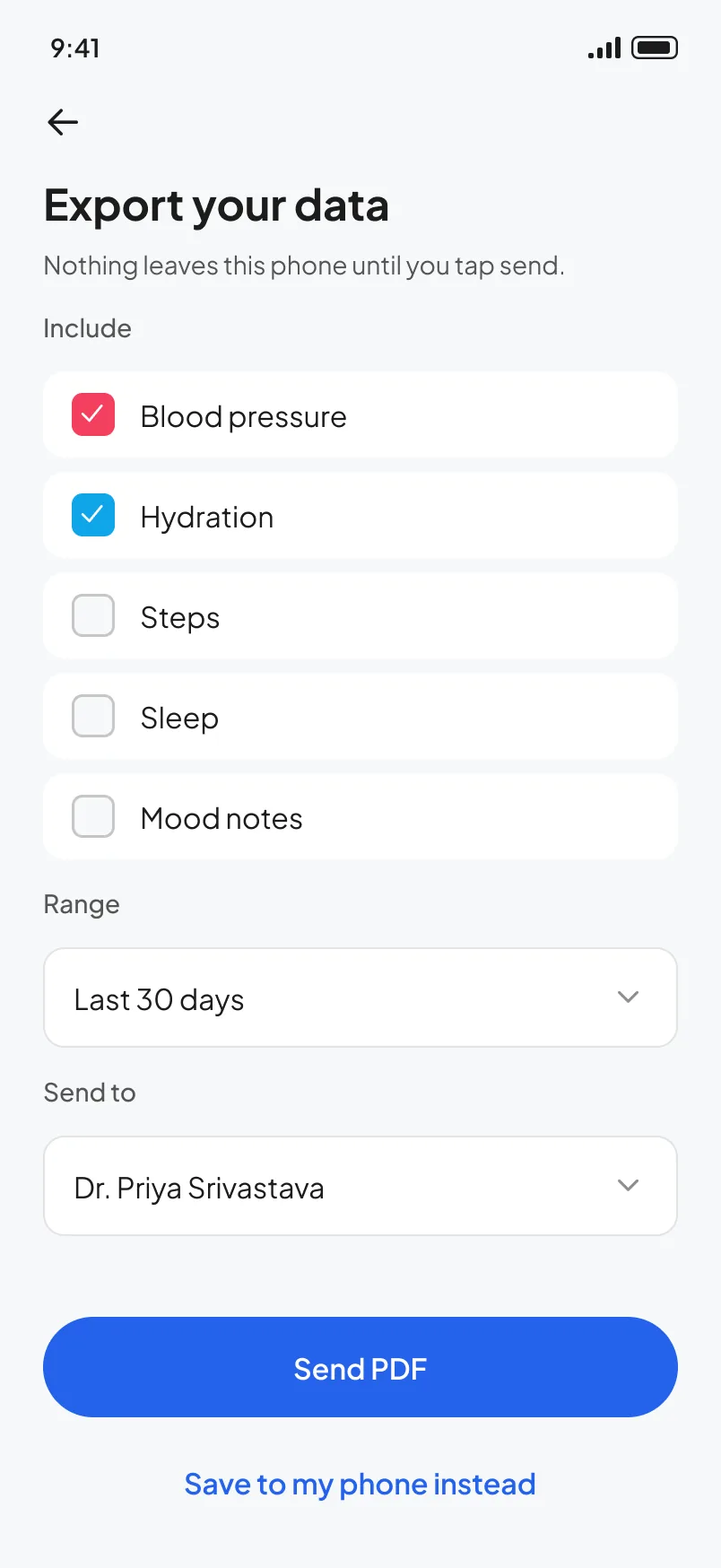
Won't move your data off this phone
Storage is local. Exporting is something you choose to do, with a send button, and nothing is kept afterwards.
Won't punish you for a gap
There are no streaks, broken-chain graphics or guilt-inducing messages. A missed day just shows as a gap in the data.
Won't sell you anything
No supplements, plans, sponsored doctors or ads, and your data is never sold. Reminders exist only to help you log.
The decision behind "no streaks"
Two lines sit next to each other in Riya's empathy map: she's motivated by streaks and progress, and she feels guilty when she misses logging for a few days. Both come from the same thing: a streak motivates you because breaking it feels bad.
That's probably fine for a step counter, but not for blood pressure. Someone who misses three days may be having a bad week, which is when their readings matter most.
So Tracto has no streaks. It counts the total days you've logged, which never resets.
05The product
Logging is the core of the app
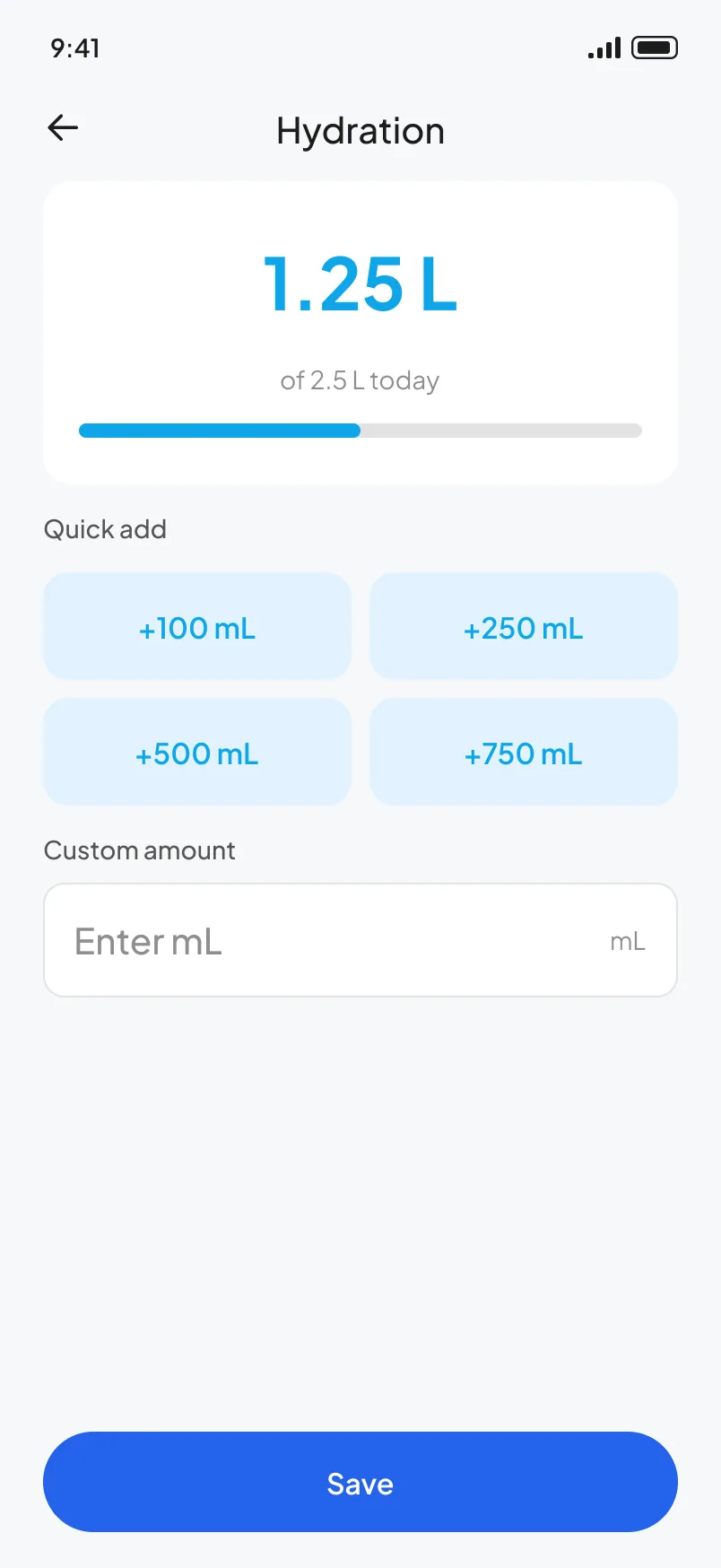
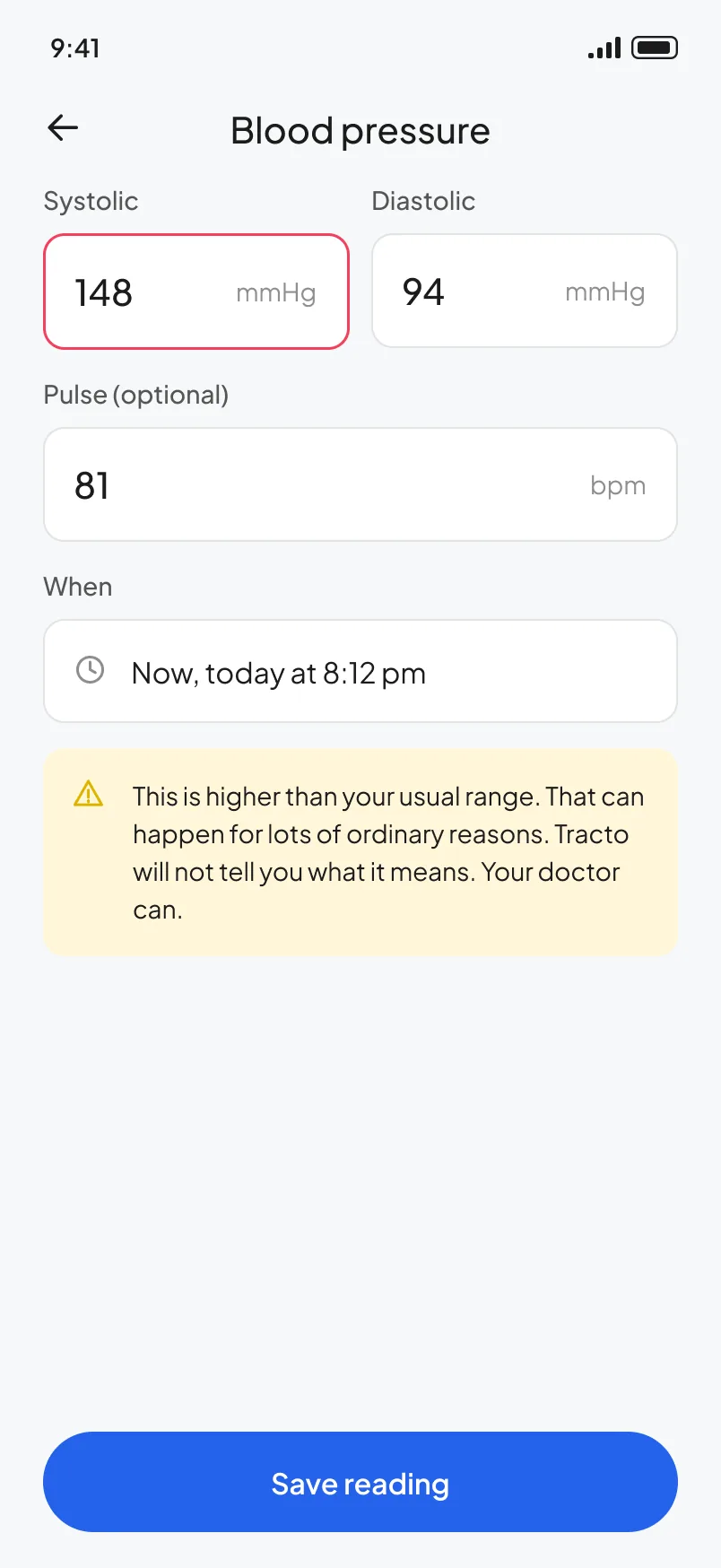
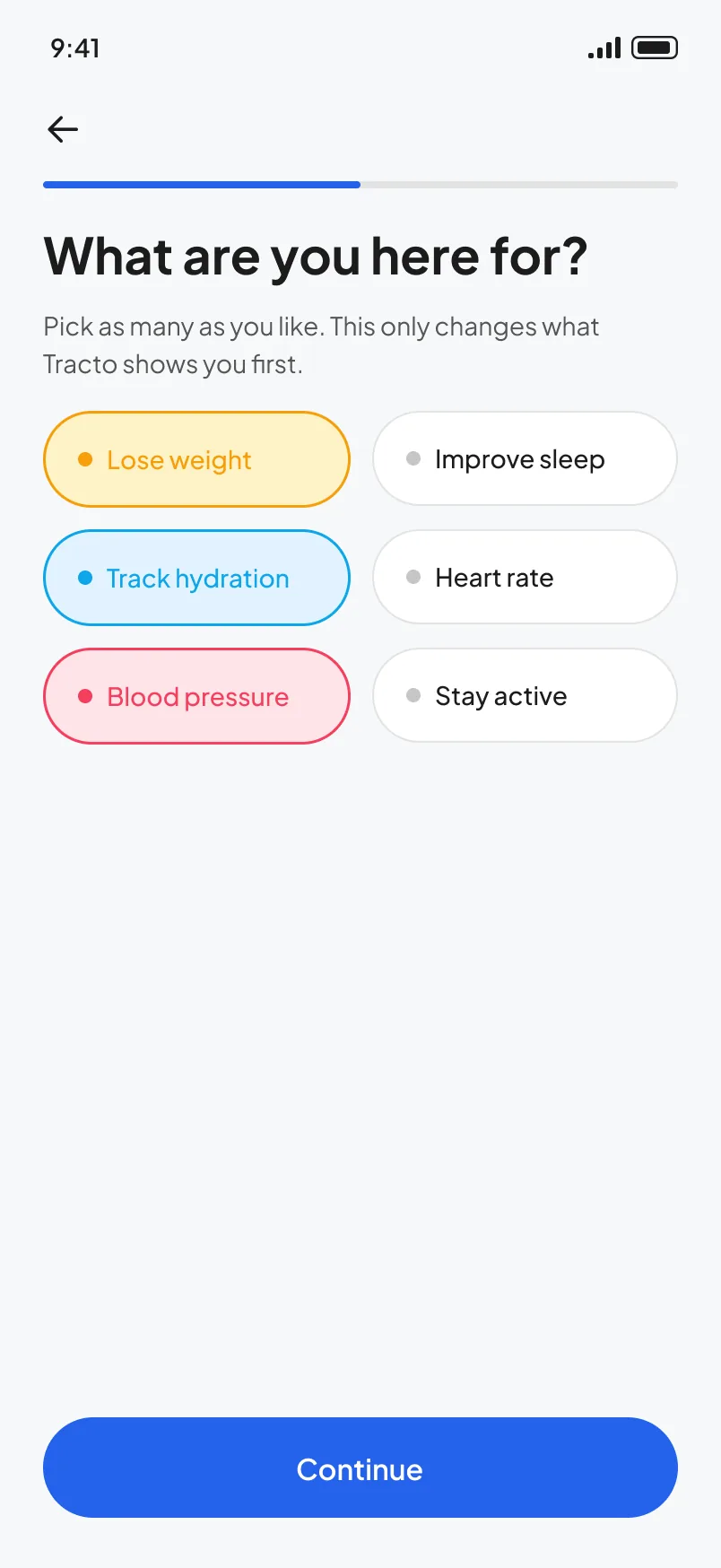
People log every day, so most entries take a single tap. Water is four buttons, with no keyboard unless you want one. Blood pressure asks for three numbers and the time. Quick-add exists because the survey put ease of use above every feature, and because Rajesh said he forgets when logging takes too long.
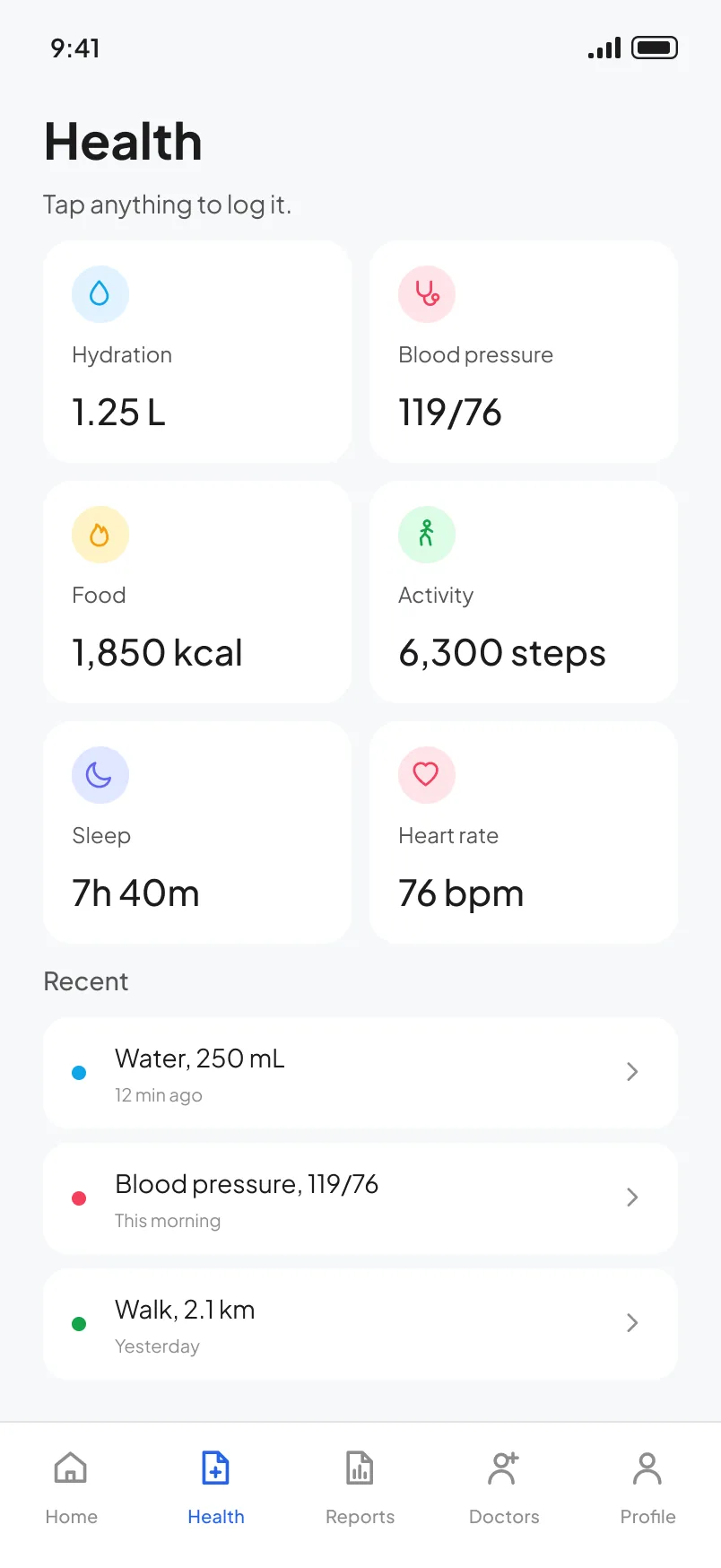
- Health
Tap anything to log it
Every metric sits on one grid with today's value, and recent entries underneath.
- Blood pressure
Three numbers and the time
A reading above the usual range says so, says it can happen for ordinary reasons and that Tracto won't tell you what it means. Your doctor can.
- Day one
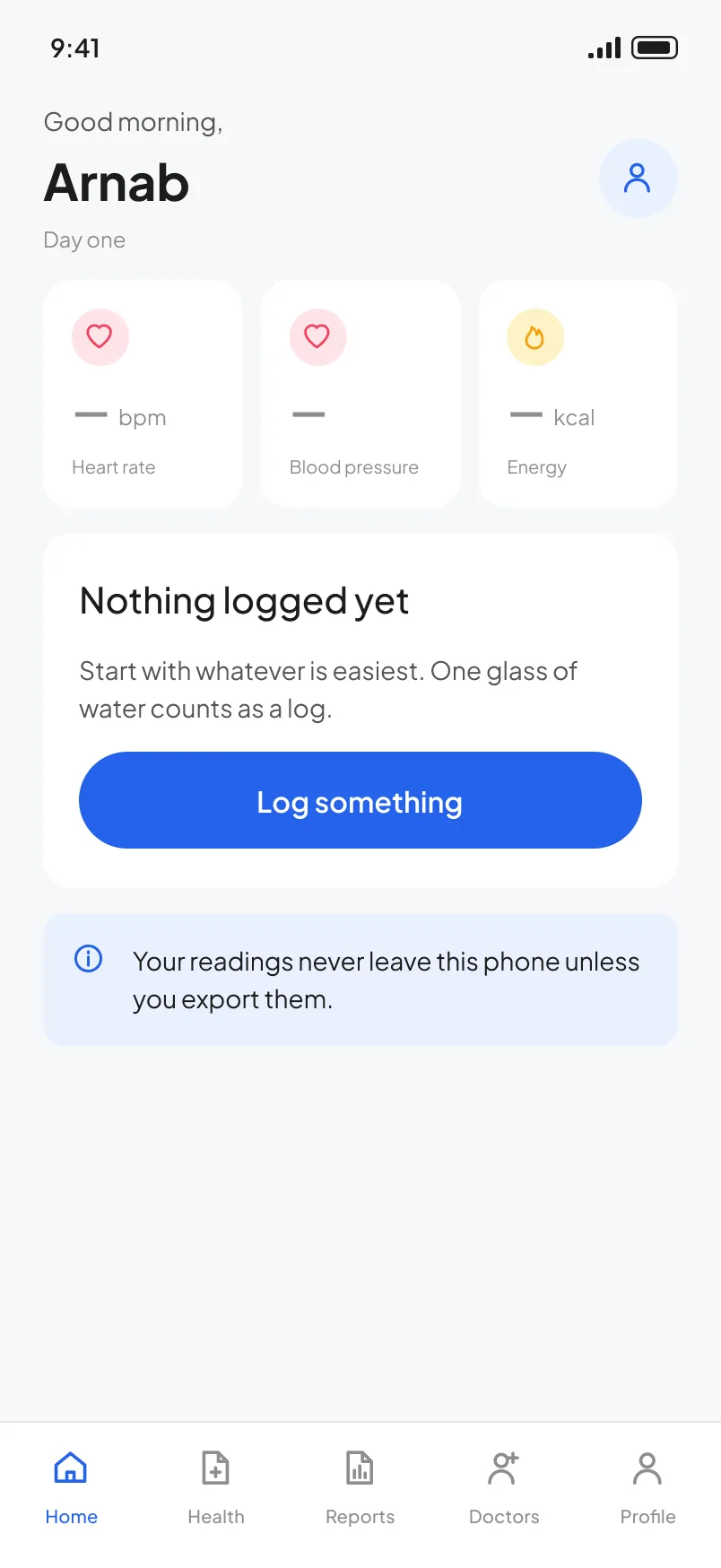
Nothing logged yet
Start with whatever is easiest: one glass of water counts as a log. The home screen says readings never leave the phone unless you export them.
06Reports and doctors
What the logging is for
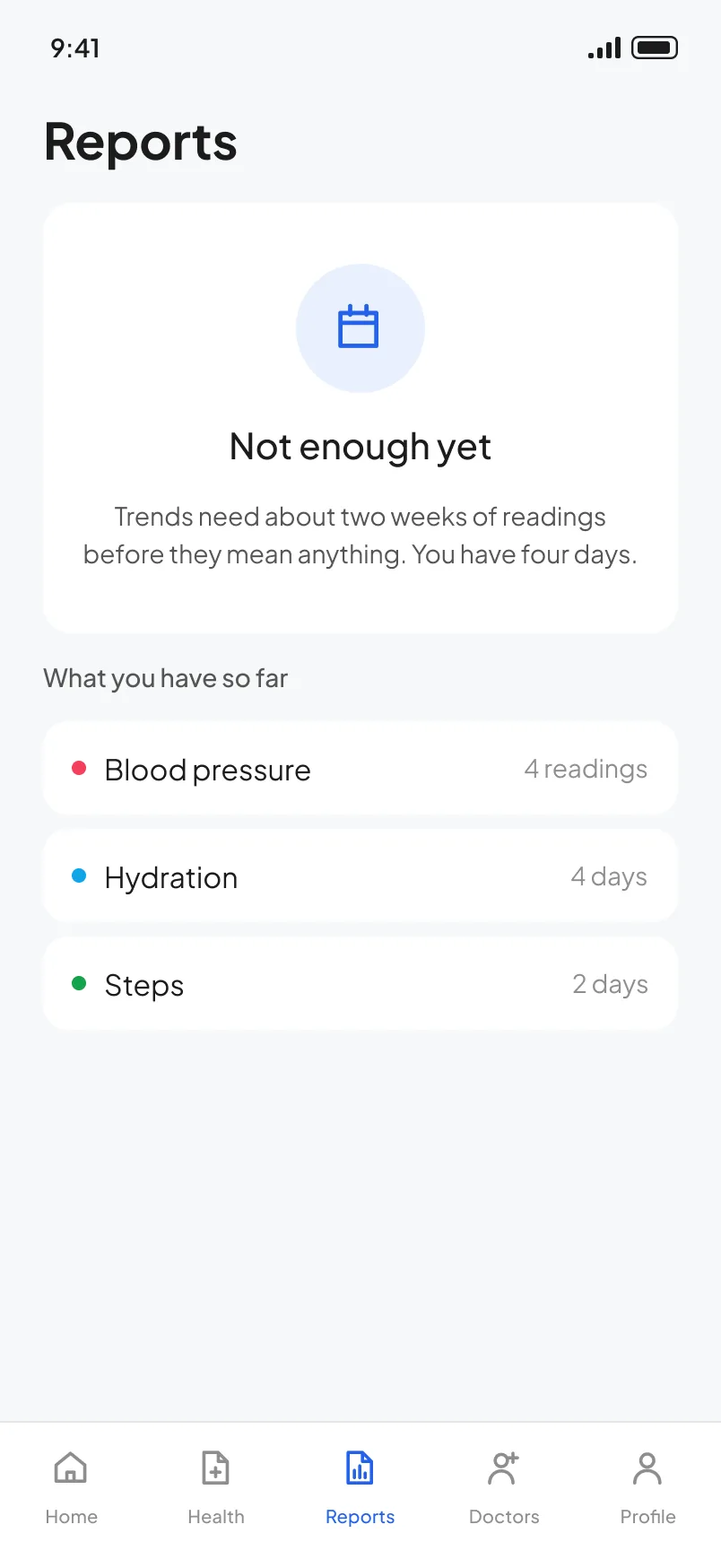
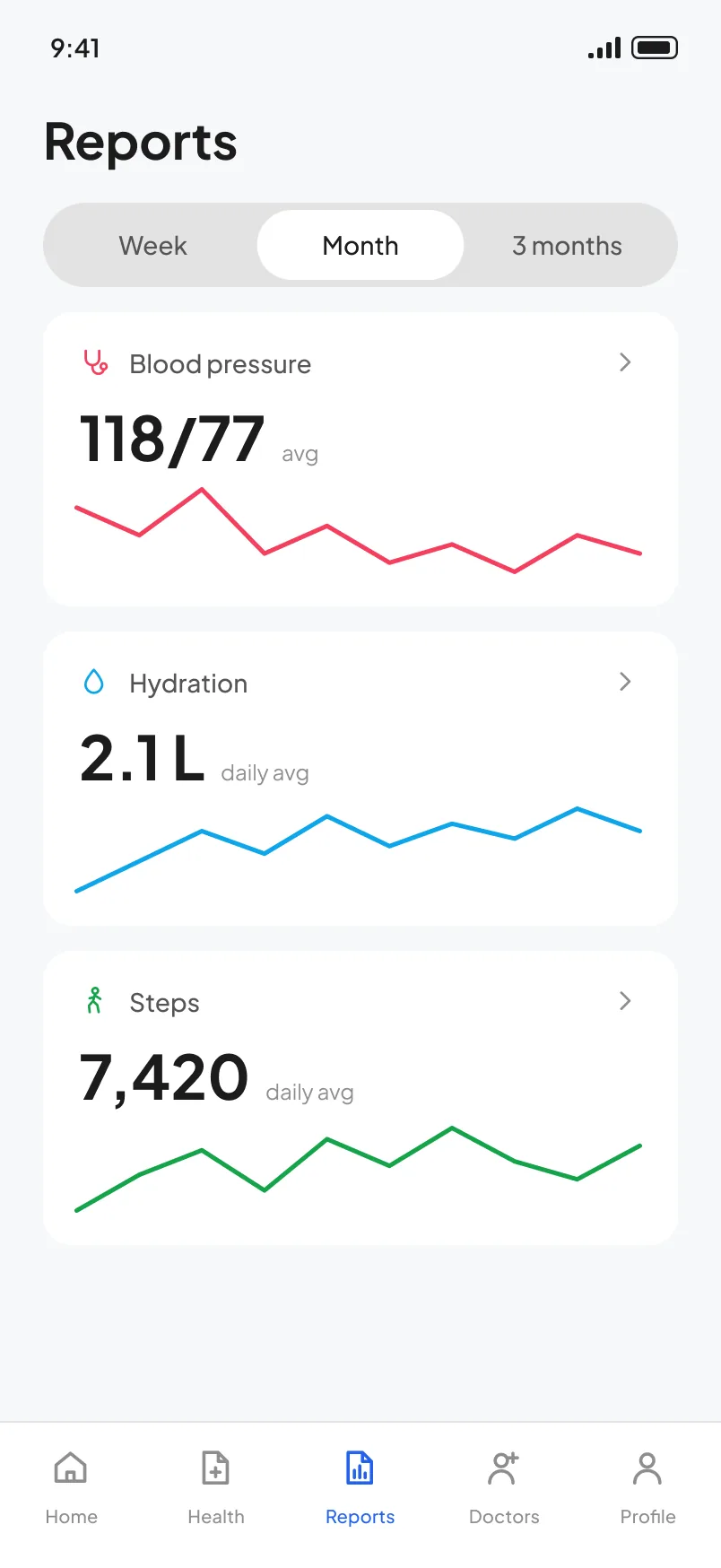
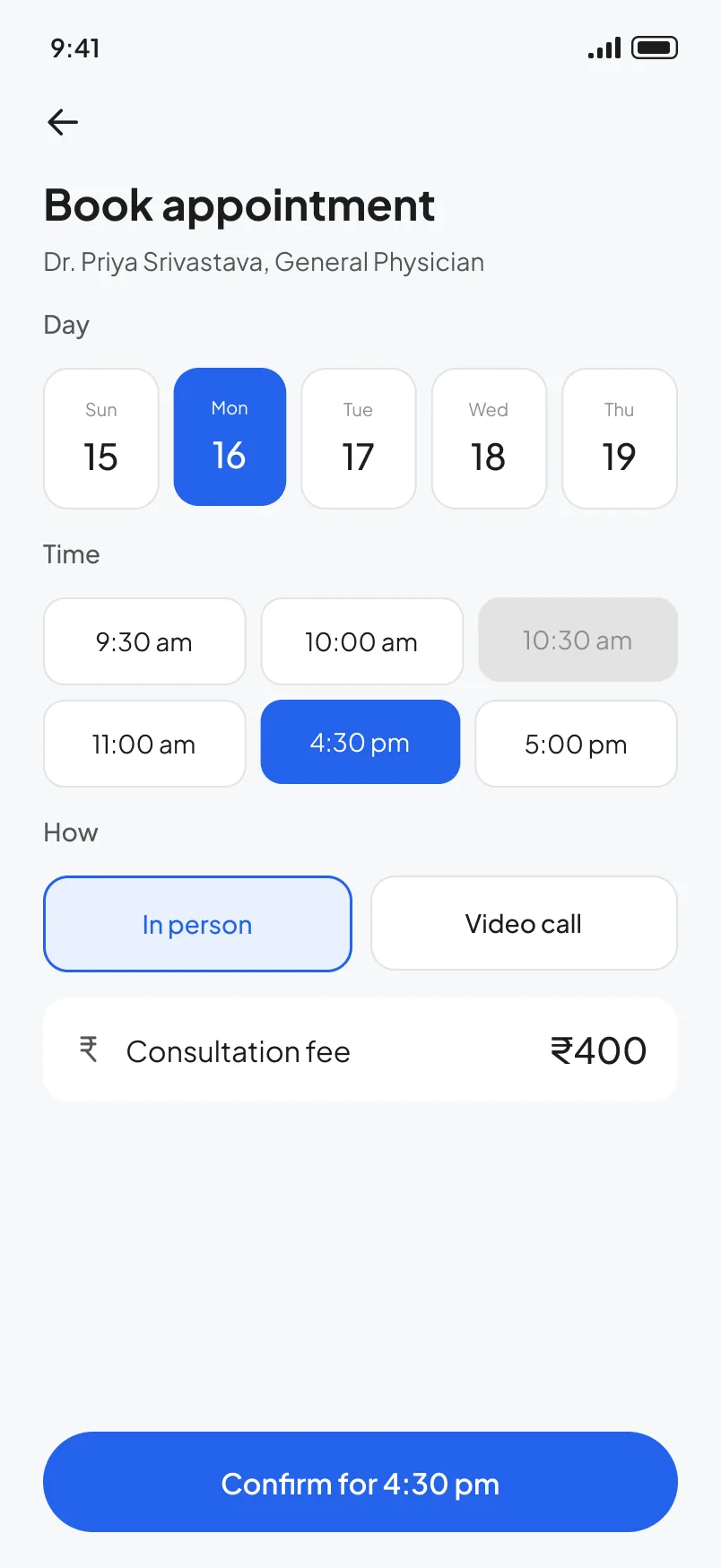
Reports give a doctor something useful to look at. Booking a doctor is a secondary feature.
07Structure and system
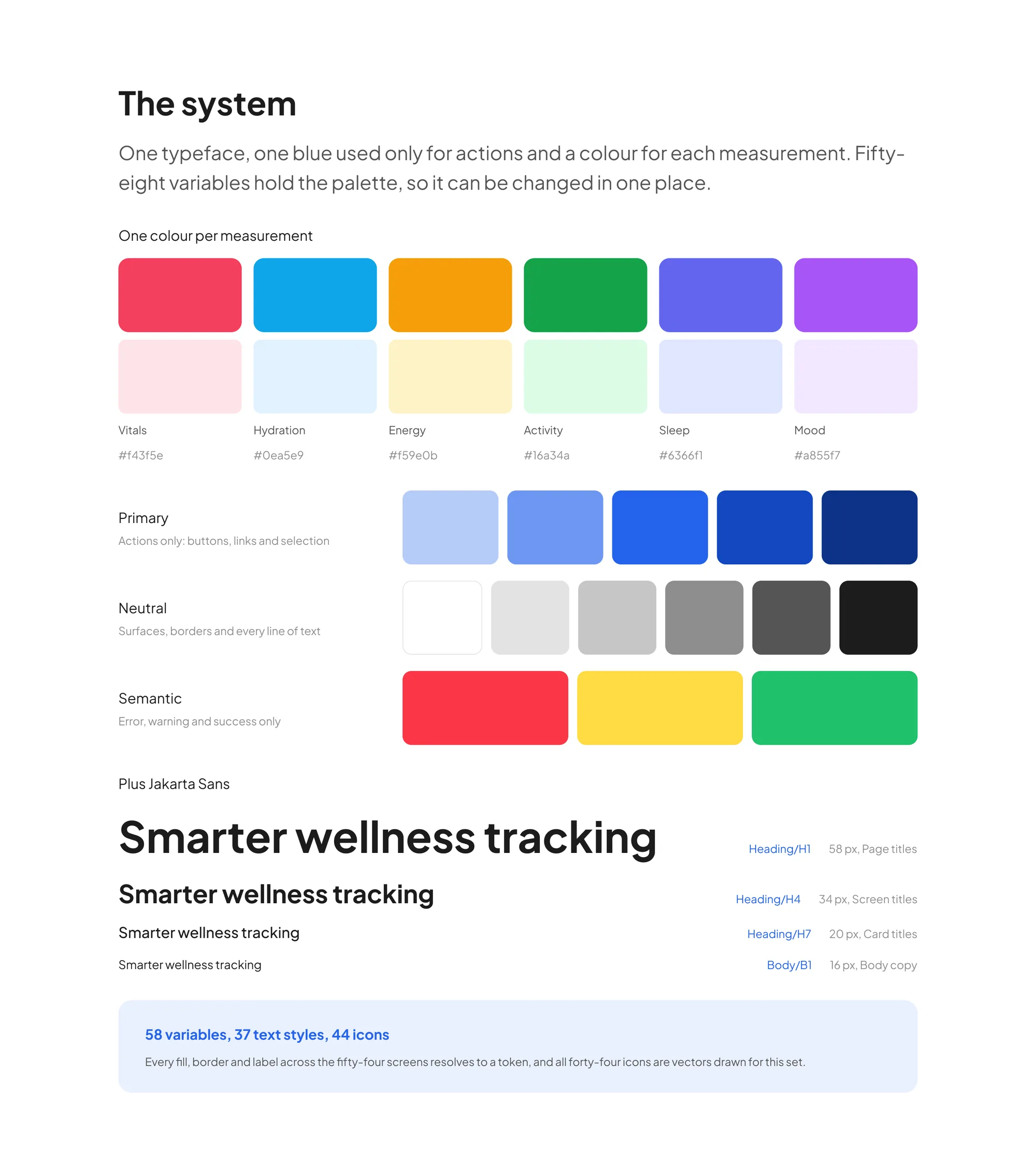
Five tabs and one accent colour
08How I used AI
A second pass over my synthesis
Where it helped
- After the five conversations, a second pass over my anonymised notes to check I hadn't missed a theme.
- Drafting alternative wordings for out-of-range readings, so I could pick the one least likely to read like a diagnosis.
What stayed mine
- The empathy-map insight about streaks, which came from reading Riya's lines side by side.
- The four constraints, and the call to put 22 of 54 screens into logging and reports.
- Naming what this case study can't prove.
09What I would test next
What the next round would test
There is no usability testing in this case study, because I haven't run it. Every decision is argued from a small survey, five conversations and a look at the apps people already use.
Streaks against days logged
Streaks do work for a lot of habit apps. Run both for eight weeks and see which group still logs in week seven, and how each describes the app after a missed week.
Where "not diagnosing" stops helping
Someone who sees 148 over 94 and is told only that it's above their usual range may find that useless. I'd test where people put the line between refusing to diagnose and refusing to help.
See the full case study
The complete Tracto case study, with the empathy maps and every screen, is on Behance.